
Explore the Ngorongoro Conservation Area (NCA), one of the premier destinations in Tanzania’s Northern Circuit. Most popular for its unique and diverse ecosystems, NCA shelters the world’s natural wonder –the Ngorongoro Crater, which dates back to over 2-3 million years. The extensive NCA covers up to 8,288 sq. km of land area and lies in the far northern part of Tanzania, within the Rift Valley. It features breathtaking landscapes, especially mountain slopes, volcanic, and savanna plains.
Ngorongoro is located in an area where you can also explore more about human history at the Olduvai Gorge. Overall, the Ngorongoro Conservation Area was created in 1959, with the crater featuring an unfilled volcanic caldera of 610m and measuring 265 sq. km. The Crater alone provides breathtaking views and also features soda lakes, including Lake Magadi. The additional craters to also explore besides Ngorongoro include Empakai and Olmoti caldera.
Wildlife species
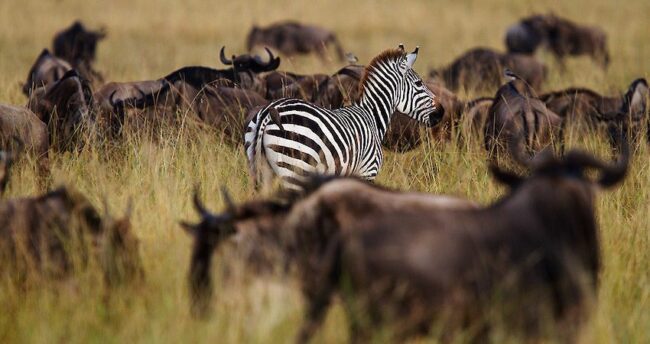
Ngorongoro Conservation Area supports a high density of wildlife, which includes spotted hyenas, reedbucks, zebras, wildebeests, blue monkeys, cheetahs, and hippos. It is a perfect spot to locate the Big 5 game (leopards, lions, buffaloes, rhinos, and elephants), gazelles, elands, and more. At the Ndutu Lake region, expect to come across several jackals, hartebeests, and more.
The bird species
At Ngorongoro Conservation Area alone, there exist about 500 species of birds, including, among others, the grassland pipit, Northern anteater chat, ostriches, secretary bird, black crakes, yellow billed storks, long-crested eagles, Fischer’s sparrow lark, red-capped lark, black-bellied bustards, and dusky turtle doves. Ngorongoro also supports birds such as Augur buzzards, emerald spotted wood doves, and several migratory birds. Among the diverse migratory species of birds often recorded here are the European swallow, Caspian lapwing, European storks, northern wheatear, rosy-breasted long claws, European rollers, and Montagu’s harriers. In addition, keen birders can also explore birds such as woodpeckers, pelicans, turacos, waders, barbets, and egrets.
Activities to do in or around Ngorongoro Conservation Area
Game drives
A visit to the Ngorongoro Conservation Area comes with a rewarding game drive experience. With a guided game drive, expect great sightings along the plains at the crater’s base, including the spotted hyenas, black rhinos, wildebeests, elephants, buffalo, giraffes, and cheetahs.
Birding tours
Bird watching is one of the most rewarding activities that you shouldn’t miss on a Tanzania safari in the Ngorongoro. Expect an amazing journey filled with remarkable sightings of your favorite birds, such as the pallid harriers, lesser kestrel, European bee-eaters, Caspian lapwings, Northern wheatears, ostriches, hottentot teal, eastern crested guinea fowl, fulvous whistling ducks, red-billed teal, flamingos, emerald-spotted wood doves, spur-winged goose, pelicans, and abdim’s storks, etc.
Nature walk/walking excursions
Guided nature walks/walking excursions can be enjoyed around the Ngorongoro or adjacent to the safari lodges. The key places to consider for nature walking include Olmoti and Empakai craters, especially for long walks/hikes. You can also consider embarking on guided walks along the Crater rim. Walk through the dense forest while appreciating the stunning views of the crater flowing downwards. As you embark on a hike/walk, you stand a chance to find birds such as the white-eyed slaty flycatchers, African Cyril, mountain buzzards, golden-winged sunbirds, and Schawlow’s wheatear.
Around the Empakai crater area, expect to penetrate through the lush forest. As you trek through the forests, you can come across amazing birds, including the lesser & greater flamingos, grey-headed Negro finch, steppe eagles, and crowned eagles.
The guided hikes on Lake Eyasi can take at least half a day. The excursion around this scenic lake also allows you to visit the nearby Maasai villages and learn a bit about unique cultures or traditions.
Explore the Olduvai Gorge en route to NCA
Guided archaeological tours should be part of your bucket list experiences on a Tanzania safari to Ngorongoro Conservation Area. The key areas of focus for this kind of experience include Laetoli and Olduvai Gorge. At Olduvai Gorge, expect to find the remains of Homo sapiens.
When to visit NCA in the Northern circuit, Tanzania
Ngorongoro is an all-year-round destination with 2 valuable travel seasons: the dry and rainy/wet. The dry season is undoubtedly the best for tourists to embark on a guided game viewing tour, especially for you to go encounter with Big 5. Ngorongoro records its peak dry season around June, July, August, September, & October. These months often come with clear skies, long sunny days, and the best weather conditions for game viewing experiences.
November-December & March-May mark the rainy or wet season of the year. Around these months, there is an abundant food supply, which makes it easier to watch lots of Ngorongoro’s wildlife. The disadvantage, though, is that they record the heaviest rainfall with game tracks often made muddy around April and May. The vegetation cover becomes dense, making it challenging to watch wildlife.
Accommodation (camps & hotels) in Ngorongoro -Tanzania
The different accommodation alternatives that you can stay in include Ngorongoro Serena Lodge, Olduvai Camp, AndBeyond Ngorongoro Crater Lodge, Elewana, Ganako Luxury Lodge, The Octagon Safari Lodge, Ngorongoro Rhino Lodge, and Acacia Farm Lodge. Other accommodation options include Ang’ata Ngorongoro Camp, Neptune Ngorongoro Luxury Lodge, Ngorongoro Forest Tented Lodge, Hhando Coffee Lodge, and Lion’s Paw Camp –Luxury facility.
How to reach the Ngorongoro CA from Arusha, Tanzania
From Arusha town to Ngorongoro Conservation Area (NCA) takes a drive time of 3-4 hours, and a 4×4 car is most preferred to ease your connectivity. Access gates to NCA include Naabi Hill gate, which is set at the border area with the Serengeti National Park. The Southern gate (Loduare gate) offers access to visitors who travel from Arusha or Karatu. If you consider taking a flight, the possible landing points include Lake Manyara Airstrip, Kogatende, and Ndutu Airstrip.
Conclusively, Ngorongoro Conservation Area should be a must-visit destination in Tanzania. This conservation area offers unique opportunities for you to explore the Big 5 game in a single habitat. Beyond the Big Five, expect to also visit the Ngorongoro Crater and enjoy its breathtaking landscape. Contact Apex Africa to organize a memorable Tanzania wildlife safari to Ngorongoro Conservation Area.